By Owen Palmer
Updated November 2026
If you are looking for the best time to buy a KitchenAid stand mixer, the answer depends on what you want from the machine and when you plan to use it. This guide covers the main shopping windows, the models worth considering, and the factors that matter most. Our selection favors bowl capacity, motor design, build quality, attachment support, and consistent owner feedback over brand hype.
Best overall: KitchenAid Artisan, 5-Qt Tilt Head Stand Mixer – View on Amazon
Best for large batches: KitchenAid 5.5-Qt Bowl-Lift Stand Mixer – View on Amazon
Best for heavy-duty baking: KitchenAid KSM8990CU 8-Quart Commercial Countertop Mixer – View on Amazon
Best for small kitchens: Kitchen in the box Stand Mixer, 3.2Qt – View on Amazon
Best accessory add-on: KitchenAid KSMPRA Pasta Roller and Cutter Set – View on Amazon
Our Top Picks
When the Best Time to Buy a KitchenAid Stand Mixer Usually Arrives
Before comparing models, it helps to understand the calendar. KitchenAid appliances are discounted most often during major retail events, and the timing of those events shapes which model you can get at the lowest effective cost. The main windows are:
- Black Friday and Cyber Monday in late November, when retailers run their deepest appliance promotions of the year.
- Early-to-mid summer sales, including Memorial Day and Father’s Day events, which often feature small kitchen appliances.
- Prime Day in July, when Amazon runs its own event and many kitchen brands join in.
- Post-holiday clearance in late December and January, when leftover inventory and older color finishes are often reduced.
Color availability also changes over time. Limited finishes tend to appear in promotions as retailers clear stock ahead of new releases. If a specific color matters to you, watch for these clearance windows rather than waiting for a general sale. For more on seasonal timing across major appliances, see Best Time to Buy Clothes Washer: A Step-by-Step Calendar Guide and 4 Best Time of Year to Buy Dishwashers for Big Savings in 2026.
Quick Comparison
| Product | Best for | Key feature |
|---|---|---|
| KitchenAid Artisan, 5-Qt Tilt Head Stand Mixer | Everyday home baking | Tilt-head design and pouring shield |
| KitchenAid 5.5-Qt Bowl-Lift Stand Mixer | Large batches and bread dough | Bowl-lift design and 11 speeds |
| KitchenAid KSM8990CU 8-Quart Commercial Countertop Mixer | Heavy-duty and frequent use | 8-quart capacity and gear-driven design |
| Kitchen in the box Stand Mixer, 3.2Qt | Small kitchens and light tasks | Compact footprint and six speeds |
| KitchenAid KSMPRA 3-pc Pasta Roller/Cutter Set | Fresh pasta lovers | Roller and cutter attachments |
KitchenAid Artisan, 5-Qt Tilt Head Stand Mixer, KSM150PS, Milkshake

KitchenAid Artisan, 5-Qt Tilt Head Stand Mixer, KSM150PS, Milkshake | Includes Pouring Shield for Mess-Free Mixing, 10 Speed Settings, Easily add Ingredients with the Tilt-Head Design
Best for: Everyday home baking and general mixing
This is the classic KitchenAid tilt-head design, suited to home cooks who bake regularly but do not need commercial-level capacity. It is a strong starting point for most households.
Key specs
- 5-quart stainless steel bowl
- 10 speed settings
- Tilt-head design for adding ingredients
- Included pouring shield
Pros
- Familiar tilt-head design that owners find easy to use
- Pouring shield helps limit splatter during mixing
- Wide range of compatible attachments
Cons
- Capacity may feel limiting for large bread batches
- Tilt-head design is less stable under very dense dough than bowl-lift models
Bottom line: A sensible choice for most home bakers who want a reliable, well-known mixer for cookies, cakes, and everyday tasks.
View on AmazonKitchenAid 5.5-Qt Bowl-Lift Stand Mixer, KSM55SXXX, Porcelain White
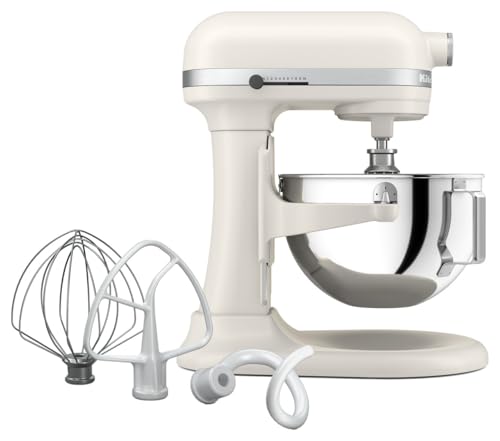
KitchenAid 5.5-Qt Bowl-Lift Stand Mixer, KSM55SXXX, Porcelain White | 11 Mixing Speeds, Includes Flat Beater, Dough Hook, Wire Whip, Stainless Steel Bowl
Best for: Large batches and bread dough
A bowl-lift model suits people who knead dough often or prepare big batches. The bowl-lift design generally feels more secure under heavy loads than a tilt-head.
Key specs
- 5.5-quart stainless steel bowl
- 11 mixing speeds
- Includes flat beater, dough hook, and wire whip
Pros
- Extra capacity for bread and large recipes
- Bowl-lift design provides stability under dense dough
- Finer speed range for controlled mixing
Cons
- Larger footprint on the counter
- Bowl-lift mechanism takes up more room when raised
Bottom line: Best for active bakers who regularly work with bread dough and want more capacity than a standard 5-quart model.
View on AmazonKitchenAid KSM8990CU 8-Quart Commercial Countertop Mixer, 10-Speed, Gear-Driven, Contour Silver

KitchenAid KSM8990CU 8-Quart Commercial Countertop Mixer, 10-Speed, Gear-Driven, Contour Silver
Best for: Heavy-duty and frequent use
This larger, gear-driven model is designed for sustained mixing and high-volume baking. It suits serious home bakers and anyone who frequently makes large quantities.
Key specs
- 8-quart capacity
- 10 speed settings
- Gear-driven drive system
- Contour Silver finish
Pros
- Large capacity for multiple batches or big recipes
- Gear-driven design suited to dense, heavy mixtures
- Sturdy build that owners often describe as long-lasting
Cons
- Considerably heavier and bulkier than home models
- Needs significant counter and storage space
Bottom line: A strong fit for committed bakers with the space to store and use a larger machine.
View on AmazonKitchen in the box Stand Mixer, 3.2Qt Small Electric Food Mixer, Black
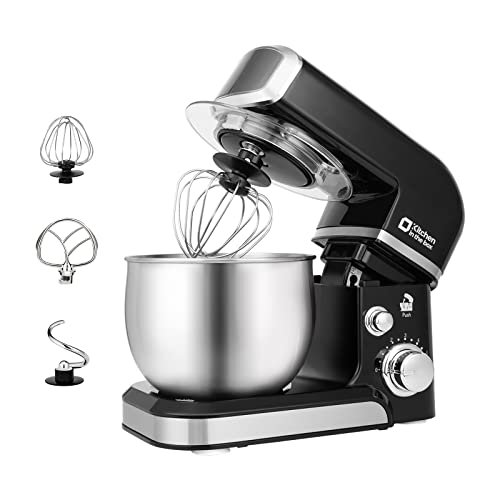
Kitchen in the box Stand Mixer,3.2Qt Small Electric Food Mixer,6 Speeds Portable Lightweight Kitchen Mixer for Daily Use with Egg Whisk,Dough Hook,Flat Beater (Black)
Best for: Small kitchens and light tasks
This compact, lightweight mixer is a budget-friendly option for people with limited counter space or occasional mixing needs. It is not a KitchenAid-branded machine, so it is a different class of product from the models above.
Key specs
- 3.2-quart bowl
- 6 speeds
- Includes egg whisk, dough hook, and flat beater
Pros
- Compact and easy to store
- Lightweight and simple to move
- Good value for occasional use
Cons
- Smaller capacity and lower power than full-size stand mixers
- Not suited to heavy bread dough
Bottom line: A practical choice for light baking in tight spaces, but not a substitute for a full-size KitchenAid if you bake frequently.
View on AmazonKitchenAid KSMPRA 3-pc Pasta Roller/Cutter Set for KitchenAid Stand Mixers

KitchenAid KSMPRA 3-pc Pasta Roller/Cutter Set for KitchenAid Stand Mixers | Fits all Household KitchenAid Stand Mixers, Stainless Roller and cutters, Easy to Clean with cleaning brush
Best for: Fresh pasta lovers who already own a compatible mixer
This is an attachment rather than a mixer. It fits KitchenAid stand mixers and adds fresh pasta making to your existing machine.
Key specs
- Three-piece set with stainless steel roller and cutters
- Designed to fit KitchenAid stand mixers
- Includes a cleaning brush
Pros
- Turns an existing mixer into a pasta maker
- Stainless steel components owners often find easy to clean
- Cleaning brush simplifies maintenance
Cons
- Requires a compatible KitchenAid stand mixer
- Limited use for people who do not make fresh pasta
Bottom line: A worthwhile add-on for households that already own a KitchenAid stand mixer and make pasta regularly.
View on AmazonBuying Guide
Bowl Capacity
Capacity is the first decision. A 3- to 5-quart bowl handles most cookie, cake, and everyday recipes. Bread bakers and people who cook for large groups usually need 5.5 quarts or more. Check the flour capacity the manufacturer lists, since bowl volume alone does not tell you how much dough the machine can handle.
Good picks for this: KitchenAid 5.5-Qt Bowl-Lift Stand Mixer, KitchenAid KSM8990CU 8-Quart Commercial Countertop Mixer
Tilt-Head vs. Bowl-Lift Design
Tilt-head models lift the head to access the bowl and are typically lighter and less expensive. Bowl-lift models raise the bowl into the mixing position, which many owners find more stable with dense dough. Choose based on how heavy your typical recipes are.
Good picks for this: KitchenAid Artisan, 5-Qt Tilt Head Stand Mixer, KitchenAid 5.5-Qt Bowl-Lift Stand Mixer
Motor and Drive System
Gear-driven mechanisms are generally associated with durability under sustained heavy loads. Look for manufacturer-stated wattage and speed range as indicators of capability, but treat wattage as only one part of the picture.
Good picks for this: KitchenAid KSM8990CU 8-Quart Commercial Countertop Mixer, KitchenAid 5.5-Qt Bowl-Lift Stand Mixer
Size and Countertop Fit
Measure your counter height and the clearance under your upper cabinets before buying. Tilt-head models are generally shorter when the head is down, while bowl-lift and larger commercial-style machines need more vertical and horizontal room. Also measure the space you have for storage.
Good picks for this: Kitchen in the box Stand Mixer, 3.2Qt, KitchenAid Artisan, 5-Qt Tilt Head Stand Mixer
Attachment Compatibility
KitchenAid stand mixers use a standard power hub that accepts a wide range of attachments. If you plan to add pasta, grinding, or other accessories later, confirm the attachment is designed for KitchenAid models and that your mixer has the hub.
Good picks for this: KitchenAid KSMPRA 3-pc Pasta Roller/Cutter Set, KitchenAid Artisan, 5-Qt Tilt Head Stand Mixer
Durability and Build Quality
Owners of metal-bodied, gear-driven models often describe them as long-lasting. Check whether the manufacturer offers a warranty and what it covers. Stainless steel bowls generally resist wear better than thinner materials.
Good picks for this: KitchenAid KSM8990CU 8-Quart Commercial Countertop Mixer, KitchenAid Artisan, 5-Qt Tilt Head Stand Mixer
Care and Cleaning
Wipe the head and body with a damp cloth and keep the motor vents clear. Hand-wash bowls and attachments unless the manufacturer states they are dishwasher-safe. Avoid submerging the motor housing. Following the care guide keeps the mixer running well for years.
Good picks for this: KitchenAid KSMPRA 3-pc Pasta Roller/Cutter Set, Kitchen in the box Stand Mixer, 3.2Qt
FAQ
When is the best time of year to buy a KitchenAid stand mixer?
Late November, around Black Friday and Cyber Monday, is typically one of the strongest windows for appliance promotions. Prime Day in July and post-holiday clearance in January are also common times to watch.
Do KitchenAid mixers go on sale often?
Sales are common during major retail events, but timing varies by retailer and model. Checking the calendar windows above helps you plan rather than relying on any single sale.
Is a tilt-head or bowl-lift model better?
Neither is better in every case. Tilt-head models are typically lighter and more compact. Bowl-lift models are often preferred for heavy dough. Your typical recipes should guide the choice.
How much capacity do I need?
For everyday baking, 3 to 5 quarts is usually sufficient. Frequent bread bakers or large households often benefit from 5.5 quarts or more.
Can I use any attachment with a KitchenAid stand mixer?
Only attachments designed for KitchenAid stand mixers fit the standard power hub. Confirm compatibility with your specific model before buying.
Are cheaper stand mixers worth considering?
Budget models can suit occasional use and small kitchens. For frequent heavy baking, a full-size machine with a more robust drive system is generally the better long-term fit.
Should I buy a refurbished or open-box mixer?
These can be reasonable options if the seller clearly describes the condition and offers a return window. Check the warranty status before purchase.
Conclusion
The best time to buy a KitchenAid stand mixer is usually during major retail events such as Black Friday, Cyber Monday, Prime Day, or post-holiday clearance, though color availability and stock levels also matter. For most home bakers, the KitchenAid Artisan is a dependable starting point. Bakers who work with heavy dough should look at the bowl-lift 5.5-quart model, while high-volume bakers with space may prefer the 8-quart commercial-style machine. The compact Kitchen in the box mixer suits small kitchens, and the pasta attachment is worth adding if you already own a compatible KitchenAid.
Sources
- Guidance on appliance efficiency and how to compare household appliance ratings (energy.gov)
- Consumer safety recalls and product safety guidance for small kitchen appliances (cpsc.gov)
- Food safety information for handling and preparing dough and baked goods (usda.gov)
Related reading
- Best Time to Buy a KitchenAid Mixer: A Calendar Guide for 2026
- When Is the Best Time to Buy a Car? 6 Top Picks for Every Need (2026)
- Best Time to Buy Plane Tickets: A Step-by-Step Calendar Guide for 2026
- Best Time to Buy Christmas Tree Artificial: A Step-by-Step Calendar Guide
About Owen Palmer
Owen Palmer is part of our editorial team and reviews and edits our holiday shopping calendar guides, checking product details against manufacturer specifications and owner feedback.